Holiday Weight Gain: What the Studies Show and Where BHB Fits
How much holiday weight gain is real? NIH and trial data on the average gain, the habit that held weight flat, and what BHB studies show at 2.9 to 10 g a day.

Every November I get the same question from friends, customers and a few retail buyers: how do I get through Thanksgiving and New Year’s without starting January five pounds heavier? Holiday weight gain is real, but the number most people quote is wrong, and the part that matters is not how much you gain. It’s that, on average, people don’t lose it.
Thanksgiving is November 26 this year, so there are roughly five weeks between Thanksgiving dinner and New Year’s Day. Below is what the studies measured, the one habit that held weight flat in a randomized trial, and where BHB supplements like goBHB® fit.
How Much Holiday Weight Gain Is Real?
The “five to ten pounds” figure has been repeated for decades with very little data behind it. In 2000, a team from the National Institutes of Health tested it. Jack Yanovski and colleagues weighed 195 adults four times between late September and early March and published the results in the New England Journal of Medicine. During the holiday window (mid-November to early or mid-January) the average gain was 0.37 kg, about 0.8 pounds. Weight did not change significantly before or after the holidays.
Averages hide a lot of spread, though. In a 2019 randomized holiday trial, the control group gained 2.65 kg (about 5.8 pounds) between a visit before Thanksgiving and a visit after New Year’s Day.
Weight change over the holidays in two studies
Average change in kg from before Thanksgiving (or mid-November) to after New Year’s.
Average adult, NIH study (Yanovski 2000)+0.37 kgControl group (Kaviani 2019)+2.65 kgDaily self-weighing group, small loss (Kaviani 2019)−0.13 kg
Bar length = size of the change relative to the largest value (2.65 kg). Sources: Yanovski et al., NEJM 2000; Kaviani et al., Obesity 2019.
Why the Pound You Gain in December Sticks Around
The most important line in the NIH paper is easy to miss. By late February or March, participants were still up an average of 0.48 kg compared with the fall, and when 165 of them came back the next September, they had not lost it. The authors concluded that this small, unreversed seasonal gain may contribute to the slow weight creep many adults see over decades.
Nobody gets heavy from one dinner. They get heavy from ten Decembers in a row where a pound or two goes on and January takes off less than half of it. In the 2019 holiday trial, the control group kept 57% of its gain 14 weeks later.
The Habit That Held Weight Flat in a Holiday Trial
The Kaviani study is the best holiday-specific trial I know of, and the intervention was not a supplement. It randomly assigned 111 adults to a control group or to daily weigh-ins on a Wi-Fi scale with a trend graph and a goal of staying at or below their starting weight. That group’s weight held steady (−0.13 kg) while the control group gained 2.65 kg. It’s cheap and it worked, so get the scale out before Thanksgiving.
Where BHB Fits: What the Fat-Loss Trials Show
BHB (beta-hydroxybutyrate) is the main ketone your body makes when you fast or cut carbs, and goBHB delivers it directly. No study has tested BHB during the holidays, but we do have controlled trials on body weight and body fat.
8 weeks, 10 g a day, on a modest calorie deficit
In the KETAD trial, published in Nutrients in November 2025, overweight adults followed a diet about 500 calories below their needs and took either 5 g of racemic BHB mineral salts twice a day (10 g/day) or a maltodextrin placebo for 8 weeks. The BHB group lost 3.05 kg versus 1.51 kg on placebo, and DEXA fat mass dropped 1.97 kg versus 0.82 kg. Those differences were trends (group-by-time p = 0.09 for weight and 0.22 for fat mass), not statistically significant wins, though only the BHB group significantly improved fat mass and lean-to-fat ratio within the group. Ketone Labs, now goBHB Labs, funded the study.
KETAD trial: 8 weeks on a calorie deficit
Average loss in kg, BHB salts (10 g/day, n = 24) vs. placebo (n = 27).
Body weight, placebo1.51 kgBody weight, BHB3.05 kgDEXA fat mass, placebo0.82 kgDEXA fat mass, BHB1.97 kg
Bar length = value / 3.05 kg. Between-group differences were not statistically significant. Source: Roeth et al., Nutrients 2025 (funded by Ketone Labs).
12 weeks, 1.5 to 2.9 g a day, no diet change
The second trial comes from Japan. In a 2025 study in Obesities, 108 adults (100 analyzed) with a BMI of 23 to 30 and high visceral fat took 1.5 g or 2.9 g of D-BHB a day, or a placebo, two hours before dinner for 12 weeks without changing how they ate or trained. At 2.9 g, visceral fat area fell 10.9 cm² more than placebo (p = 0.002) and body weight came in 1.4 kg lower (p = 0.045). The 1.5 g dose also lowered visceral fat, with no D-BHB-related side effects reported. Visceral fat was measured by CT, but body fat percentage came from bioimpedance, and four of the six authors work for Osaka Gas and its chemicals subsidiary, which supplied the D-BHB, so read it as promising rather than settled. I covered that study in more detail in our breakdown of BHB and visceral fat.
A Practical Holiday Plan Using goBHB
Here’s how I’d set it up for the season. Weigh in daily. Keep protein high and walk after the big dinners. If you add a BHB supplement, use it daily, because both trials above ran for 8 to 12 weeks. A good time is mid-afternoon or a couple of hours before dinner, which mirrors the Japanese protocol. If you’re new to dosing, our post on whether keto pills work at the doses they use lays out the numbers.
Beyond Raw Chemistry Labs BHB Salts (GNC)
Beyond Raw Chemistry Labs BHB Salts: 5 g of goBHB D-BHB per serving.
GNC’s Beyond Raw line gives you 5 g of goBHB D-BHB per serving, bound to calcium, magnesium, sodium and potassium, with no flavoring. Note that KETAD used racemic (D/L) salts, so one serving of this D-BHB is closer to KETAD’s daily D-BHB content than two. It runs $39.99 for 30 servings at GNC, per Stack3d.
Sports Research Keto+
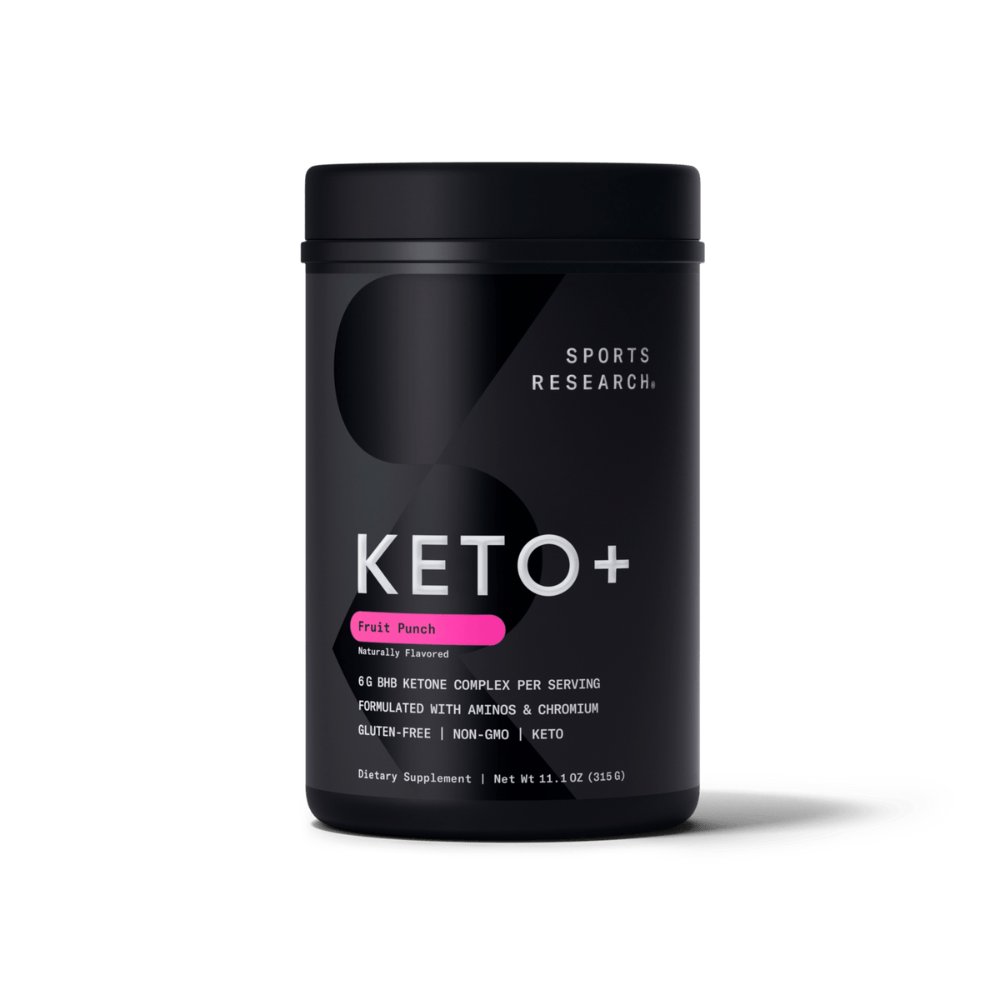
Sports Research Keto+ delivers a 6 g goBHB ketone complex per scoop.
If you’d rather drink something flavored, Sports Research Keto+ has a 6 g goBHB ketone complex in a 10.5 g scoop, plus 600 mg leucine, 250 mg acetyl-L-carnitine and 100 mcg chromium, for 20 calories. It’s sold in Fruit Punch and Raspberry Lemonade.
CleanForm Nutrition goBHB

CleanForm goBHB powder carries NSF Certified for Sport.
CleanForm’s goBHB powder uses a blend of calcium, magnesium, sodium and potassium BHB salts in Unflavored, Tangy Apple and Strawberry Kiwi, and it’s NSF Certified for Sport, which matters if you’re a tested athlete. Its 50/50 D/L blend is the closest match here to the racemic salts used in KETAD.
Where the Evidence Stands
The holiday data is solid: average gains are small, they stick, and daily weighing held weight flat in a randomized trial. The BHB data is encouraging but early. In KETAD the between-group differences weren’t significant, but the BHB group lost about twice the weight and fat of placebo on a diet, and the study was industry funded. The Japanese trial found significant visceral fat and weight differences at 2.9 g a day, from one 12-week trial run largely by the ingredient’s maker. BHB may help support a fat-loss plan you’re already running. It doesn’t replace the plan.
BHB salts carry minerals, and the sodium adds up (Keto+ lists 280 mg per scoop, Beyond Raw 210 mg). If you watch your sodium for blood pressure, have kidney problems, are pregnant or nursing, or take prescription medication, talk to your doctor first. Our post on BHB salts side effects covers stomach tolerance and who should skip them.
Frequently Asked Questions
How much weight does the average person gain over the holidays?
In the NIH study of 195 adults, the average gain from mid-November to January was 0.37 kg, a little under a pound. A 2019 trial’s control group gained about 5.8 pounds over the same stretch.
Does holiday weight gain go away on its own?
On average, not completely. NIH participants were still up about a pound the following fall, and the 2019 trial’s control group kept 57% of their holiday gain 14 weeks after New Year’s.
What’s the best way to avoid holiday weight gain?
The strongest holiday-specific evidence supports weighing yourself every day and tracking the trend. In that trial, the daily weighers held their weight steady while the control group gained 2.65 kg.
Can BHB supplements help with holiday weight gain?
No study has tested BHB during the holidays. In a 12-week trial, 2.9 g a day of D-BHB lowered visceral fat and weight versus placebo, and an 8-week diet trial of BHB salts showed a non-significant trend toward more fat loss.
The Bottom Line
You probably won’t gain ten pounds this holiday season. You might gain one, and on average, people in the research kept it. Start weighing yourself daily before Thanksgiving, keep protein high, and stay active. If you add goBHB, take it every day at a dose in the range the trials used (2.9 g of D-BHB up to 10 g of racemic salts), and give it weeks, not days.
Disclosure: goBHB Labs makes goBHB®, the BHB used in the products above, and benefits from their sales.
Sources: Yanovski JA, et al. A prospective study of holiday weight gain. N Engl J Med. 2000;342(12):861-867. Kaviani S, vanDellen M, Cooper JA. Daily Self-Weighing to Prevent Holiday-Associated Weight Gain in Adults. Obesity. 2019;27(6):908-916. Roeth EJ, et al. Effect of Exogenous Ketones as an Adjunct to Low-Calorie Diet on Metabolic Markers. Nutrients. 2025;17(22):3582 (funded by Ketone Labs). Katsuya S, et al. Effect of D-β-Hydroxybutyric Acid on Body Fat in Japanese Adults. Obesities. 2025;5(4):82. Product details from Stack3d (Beyond Raw BHB Salts), Vitacost (Sports Research Keto+) and cleanformnutrition.com.